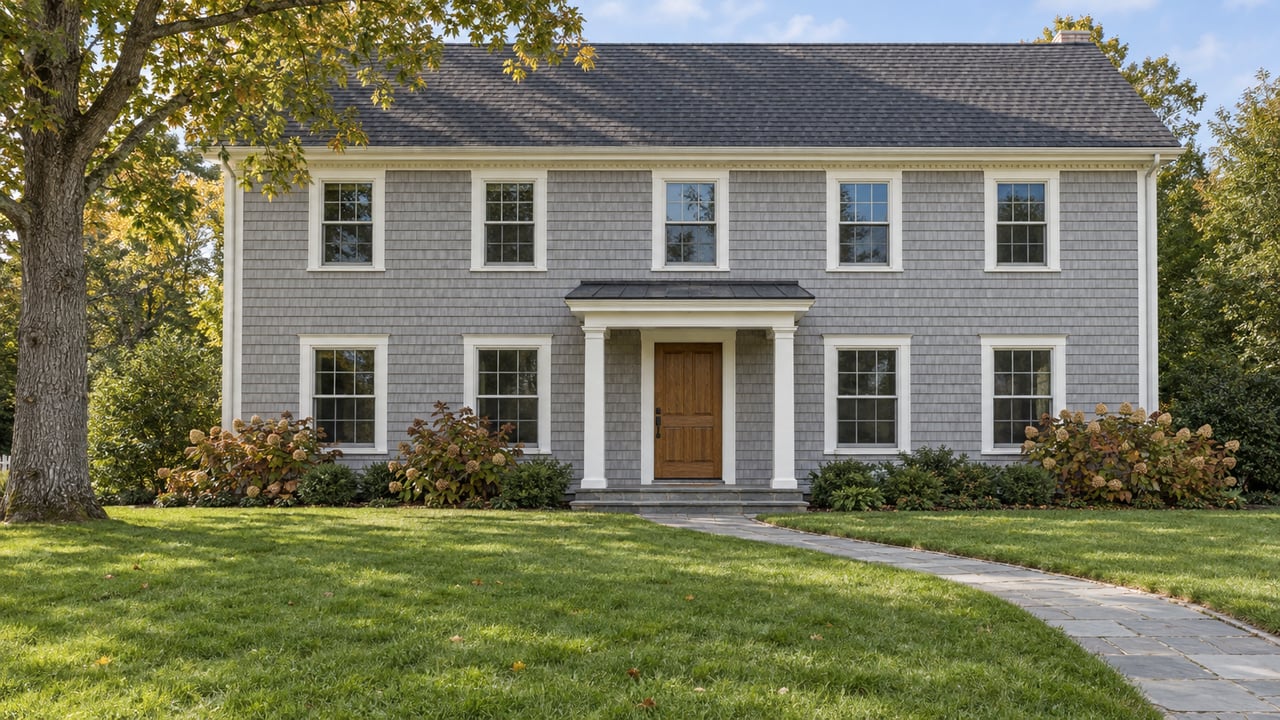
Deal Park covers about 160.4 acres, bounded generally by Poplar Brook, Roseld Avenue, Monmouth Road and Washington Drive. It sits right beside the Borough of Deal and carries the Deal name, but legally it is part of Ocean Township. In late September 2026, residents filed a petition to change that and become part of Deal, according to the Asbury Park Press.
For anyone pricing a home on either side of that line, the petition raises one practical question. How much of a possible future in Deal should show up in what a buyer pays today? Both the statute and the most recent Jersey Shore precedent point to the same answer. A Deal Park home should be valued as Ocean Township property, and buyers should plan on that lasting a long time.
Where the Petition Stands as of October 2026
NJ.com reported that the petition carried 89 signatures. The Ocean Township Council sent it to the township planning board on Sept. 24, and the board will review it and hold public hearings before the council decides whether to support the change. The same report said the neighborhood has more than $626 million in total assessed taxable real estate.
Ocean Township has made its position clear. Township spokesperson Steve Lenox told NJ.com:
"Township of Ocean officials are unrelentingly committed to serving the entirety of our community, making ours the very best place to live. That's why we were surprised to learn last week that a small number of residents have spearheaded an effort to remove themselves from our family."
Deal's position depends on which outlet you read. The Asbury Park Press reported that Deal officials said they have no plans to add Deal Park. NJ.com, two days later, reported that Deal officials had not taken a public position and that Mayor Samuel Cohen had not responded to a request for comment. As explained below, Deal's position carries as much weight as Ocean Township's.
The border has a long history. Deal itself was part of Ocean Township until it became a separate municipality in 1898.
The Number Behind the Interest
None of the sources quotes the petitioners on their reasons, so this post does not speculate about them. What the public record does show is how far apart the two towns' tax rates are. Here are the latest figures from the New Jersey Division of Taxation's 2025 rate table and the Monmouth County 2026 equalization table:
| Measure | Deal Borough | Ocean Township |
|---|---|---|
| 2025 general tax rate, per $100 of assessed value | 0.411 | 1.320 |
| 2025 effective tax rate | 0.435 | 1.323 |
| 2026 Director's equalization ratio | 106.35 | 101.12 |
The state uses the general rate to calculate an actual tax bill. The effective rate adjusts for each town's assessment level so that towns can be compared fairly. Both towns' 2026 equalization ratios sit close to 100, so the gap between their general rates is a fair measure of the real gap. Using 2025 rates, a home assessed at $1,000,000 would owe about $4,110 in Deal and about $13,200 in Ocean Township. The difference is roughly $9,000 a year on identical paper value.
No source projects what Deal's rate would become if more than $626 million in new assessed value joined its tax base, along with the services that property would need. Deal's 2025 rate reflects Deal's 2025 budget and tax base, so a moved border would not necessarily bring the full gap with it.
Why the Statute Is Built to Move Slowly
New Jersey's annexation law, N.J.S.A. 40A:7-12, requires approvals from several parties, and none of them is automatic.
- Petition. The petition must be signed by at least 60% of the legal voters living in the area. It has to set out the boundaries and come with an assessor's sworn statement of the area's assessed value.
- Planning board review. The town losing the land must send the petition to its planning board within 14 days. The board then has 45 days to report on how annexation would affect the town.
- Consent of the losing town. The governing body must vote within 30 days of receiving that report. Consent takes a resolution adopted by two-thirds of its full membership. NJ.com reported that this means four of Ocean Township's five council members.
- Consent of the receiving town. Under N.J.S.A. 40A:7-13, Deal would have to annex the land by an ordinance passed by a two-thirds vote.
- Court. If either town refuses, petitioners can go to court. Under N.J.S.A. 40A:7-12.1, they must prove three things: the refusal was arbitrary or unreasonable, the refusal harms the economic and social well-being of a majority of the area's residents, and annexation would not significantly injure the town losing the land.
If the clock runs from the Sept. 24 referral, the statute calls for a township council vote around the end of 2026. That date is only the end of the first step. Because the petitioners carry the burden on all three court factors, even a council refusal that later turns out to be wrong can take years to undo.
What "Winning" Looked Like the Last Time
The closest model is in Ocean County. Residents of South Seaside Park filed a petition in September 2014 to leave Berkeley Township and join Seaside Park. In Whiteman, decided July 10, 2025, the New Jersey Supreme Court upheld the order allowing deannexation. The Court said a planning board has to evaluate a petition independently and make an objective recommendation. The Seaside Park Borough Council voted on March 30, 2026, to accept the area, which covers about 168 acres and roughly 1,400 homes, according to Shorebeat.
That took more than 11 years. And the vote did not settle everything.
Shorebeat reported in August 2026 that Berkeley was still collecting taxes from the area. Seaside Park was providing police, fire, EMT, public works and administrative services without receiving the matching tax revenue. In an order filed Sept. 25, 2026, Superior Court Judge Francis R. Hodgson Jr. denied Seaside Park's demand that the money be turned over immediately. He sent the disputed receipts, along with related debts and credits, to the formal accounting between the two towns, which is to be handled by court-appointed commissioners. As of Oct. 5, Shorebeat reported, those commissioners had not been appointed. Mayor John Peterson told his council there were "a number of decisions yet to be made before a committee would be appointed."
The same article described smaller frictions after the transfer, including a disagreement over honoring beach badges sold before the summer. WHYY reported that a study estimated annexation could lower Seaside Park's tax burden by about 8%. That was a projection, and none of the reporting shows what South Seaside Park households actually pay now.
For a Deal Park buyer, the lesson is about timing. Getting a new municipality took more than a decade. Sorting out the money is still unfinished months after the vote.
Pricing a Deal Park Home While the Question Is Open
A buyer's carrying-cost analysis should rest on the tax bill that exists now, from Ocean Township at Ocean Township's rate. A seller can describe the petition accurately as public news. Listing it as an expected benefit would be a forecast that neither town has endorsed. On appraisal, comparable sales inside Deal Park reflect Ocean Township taxes and services. A Deal sale a few blocks away answers a different question.
The petition belongs in a buyer's notes as a public process worth watching. The planning board hearings will be the first place both towns' arguments appear on the record, and the Ocean Township Council vote that follows is the first real signal. A buyer who treats annexation as a small long-term possibility, rather than something already priced in, is reading the record the way it currently stands.
Questions Buyers Raise
Does the petition change anything for a sale closing this year? No municipal change has taken effect. Under the statute, a council decision is the earliest formal step, and two towns would still need to vote after that, possibly followed by court review.
Does 89 signatures meet the 60% requirement? None of the reporting gives the number of registered voters in the area, so nothing published yet answers that.
If annexation happened, would Deal's 2025 rate apply to Deal Park homes? No source says so. Any future rate would depend on Deal's budget and on a tax base that would then include Deal Park's more than $626 million in assessed value.
This post is general information about how New Jersey's annexation process and property tax rates work. It is not legal, tax or financial advice, so confirm your own situation with a qualified attorney or tax professional.
If you are weighing a home near the Deal and Ocean Township line and want a careful read of its tax position, comparable sales and the petition's progress, Bruce Germinsky would be glad to go through it with you. Let's Connect.